
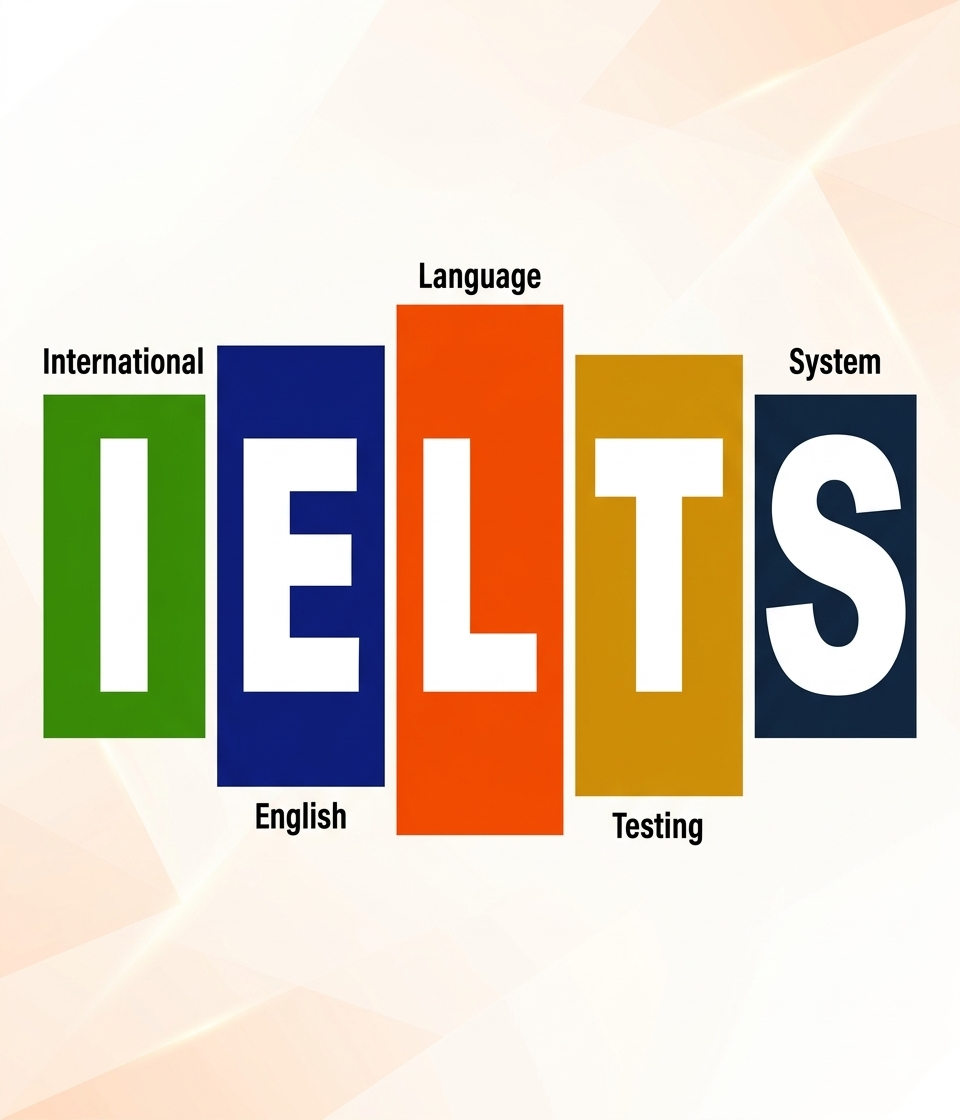
Introduction to IELTS (International English Language Testing System)
ELTS (International English Language Testing System) is one of the world’s most widely accepted English proficiency tests for students and professionals planning to study, work, or migrate abroad. It evaluates your ability in four key language skills—Reading, Writing, Listening, and Speaking—and is recognized by universities, employers, and immigration authorities across countries like the UK, Canada, Australia, New Zealand, and more.
With the right preparation and guidance, IELTS can help you achieve the score needed to reach your academic and career goals.
Types of IELTS

for university / higher education

for work / migration
IELTS Preparation Steps
The Reading section tests your ability to understand and interpret texts from books, journals, magazines, and newspapers. It focuses on skills like skimming, scanning, and identifying key ideas. Our expert guidance helps you manage time effectively and answer all question types accurately.
The Writing section consists of two tasks: describing graphs, charts, or processes (Task 1), and writing a structured essay with clear arguments and examples (Task 2). We train students to enhance grammar, vocabulary, coherence, and overall writing style to achieve high band scores.
The Speaking section assesses your fluency, pronunciation, grammar, and ability to communicate ideas clearly. Through mock interviews and personalized coaching, we help students speak confidently, respond effectively to questions, and perform naturally under test conditions.
Listening: The Listening section evaluates your understanding of conversations and monologues in different English accents, such as British, Australian, and American. We provide practice strategies to catch important details, avoid common traps, and improve concentration throughout the recordings.
Understanding IELTS Band Scores
IELTS is scored on a band scale from 0 to 9. Each section—Reading, Writing, Listening, and Speaking—receives a band score, and the overall score is the average. Higher bands show stronger English proficiency and improve your chances for admission, scholarships, and visas.
| Band | Proficiency Level | Description |
|---|---|---|
| 9 | Expert | Fully fluent, no mistakes. |
| 8.5 – 8.0 | Very Good | Excellent, minor errors. |
| 7.5 – 7.0 | Good | Effective, occasional mistakes. |
| 6.5-6.0 | Competent | Generally effective, some errors. |
| 5.5 – 5.0 | Modest | Partial command, frequent errors. |
| 4.5 – 4.0 | Limited | Basic communication only. |
| 3.5 – 3.0 | Extremely Limited | Very limited English. |
| 2.5 – 2.0 | Intermittent | Isolated words only. |
| 1 | Non-User | Cannot use English. |
| 0 | Did Not Attempt | No attempt made. |
Why Choose IELTS?
How We Help You Prepare?
Frequently Asked UK Questions
An IELTS score is generally valid for 2 years from the test date.
IELTS Academic is for students applying to universities and higher education institutions, while IELTS General Training is mainly for work experience, migration, or secondary education.
IELTS is scored on a band scale from 0 to 9, with each section receiving an individual band score and an overall band score.