

Receiving your university acceptance letter and securing your student visa are monumental victories. However, the true test begins the moment you step off the plane.
Study in the UK in January Intake
Where Dreams Meet Opportunities
Receiving your university acceptance letter and securing your student visa are monumental victories. However, the true test begins the moment you step off the plane.
How can
we help you?

Life as an international student is a fast-paced exercise in logistical management, financial discipline, and rapid cultural adaptation. Across top-tier destinations like Canada, the UK, Australia, New Zealand, and Denmark , the post-arrival landscape has become highly competitive. From navigating localized housing shortages to complying with strictly enforced part-time work caps, your first three months will set the trajectory for your entire academic and professional journey.
This operational guide provides the exact landing framework used by elite consultants to ensure you do not just survive your arrival, but systematically build a foundation for long-term career success.
The Soft Landing: Your Immediate 72-Hour Checklist
The first three days in your new home country should be entirely focused on administrative compliance and securing critical infrastructure. Do not delay these three foundational steps:
1. Secure Local Identification and Tax Registrations
You cannot legally work or open proper bank accounts without national identity markers.
Canada: Visit a Service Canada office immediately to obtain your Social Insurance Number (SIN) .
Australia: Apply online for your Tax File Number (TFN) through the Australian Taxation Office.
United Kingdom: Collect your Biometric Residence Permit (BRP) within the designated timeframe from your chosen post office or university hub.
Denmark: Register at the local Citizen Service ( Borgerservice ) to secure your CPR Number (personal registration number) and your digital ID ( MitID ).
New Zealand: Apply for an Inland Revenue (IRD) number online to ensure you are taxed at the correct code when you start working.
2. Establish Institutional Banking
Avoid steep international transaction fees by setting up a local student bank account on Day 1. Look for banking institutions that offer zero monthly maintenance fees for students and provide integrated, low-cost international remittance options so your family can transfer funds smoothly.
3. Acquire a Local Communications Profile
Ditch your home-country roaming plan immediately. Buy a local SIM card with a reliable data architecture. A local phone number is mandatory for your housing applications, bank verification, and resume submissions.
De-Risking the Housing Search: Finding Accommodation Safely
The global student housing landscape is exceptionally tight. Landing without a calculated strategy can leave you stranded in expensive temporary hotels or vulnerable to predatory rental scams.
Navigating Local Rental Realities
In Canada: Utilize platforms like Kijiji, RentFaster, or dedicated student housing portals. Be prepared for landlords asking for proof of enrollment and bank statements. Avoid sending deposits before viewing a property in person.
In Australia: The rental market is blistering. Use Realestate.com.au or Domain, and build an integrated profile on 2Apply. Look into purpose-built student accommodations (PBSA) like Scape or UniLodge for a seamless, utilities-included option.
In the United Kingdom: Platforms like Rightmove and Zoopla are industry standards. Note that if you lack a UK-based financial guarantor, many private landlords will request anywhere from 3 to 6 months of rent upfront.
In Denmark: Housing in Copenhagen and Aarhus requires extreme foresight. Register early on verified portals like BoligPortal, and always ensure your lease explicitly allows you to register your mandatory CPR number at that address.
In New Zealand: Look into "flatting" (shared housing) via Trade Me or regional student Facebook networks, which balances cost effectively.
Mastering the Budget: International Student Cost of Living Matrix
Inflation and housing costs vary heavily across these five premier destinations. To prevent financial distress, your monthly budget must be mathematically sound.
The following table outlines realistic, localized cost profiles for average student life:
Part-Time Work Jurisdictions: Compliance and Strategy
Working part-time is an excellent way to offset your international student cost of living, but immigration departments heavily audit student work hours. Breaching these limits can result in immediate visa cancellation.
[2026 Student Weekly Work-Hour Limits]
 ├── Canada: 24 Hours/Week Max (Off-Campus)
 ├── Australia: 48 Hours/Fortnight Max
 ├── United Kingdom: 20 Hours/Week Max (Term Time)
 ├── New Zealand: 20 Hours/Week Max (Term Time)
 └── Denmark: 90 Hours/Month Max (Plus full-time June-August)
Strategic Job Hunting
Do not just look for survival jobs in retail or hospitality. Aim for on-campus roles (research assistantships, library services, student union administration). On-campus jobs usually offer flexible scheduling around your exams and have no caps on your study permit in places like Canada.
If working off-campus, target entry-level positions within your broader industry sector. A corporate administrative role or a customer service position within a tech or banking entity provides far higher resume value for your post-study work visa than unregulated manual labor.
Common Post-Arrival Mistakes to Avoid
Through our comprehensive study abroad consultant post arrival support, we routinely observe avoidable missteps that jeopardize a student's mental health and academic status:
Isolating Inside Cultural Enclaves: While connecting with peers from your home country provides comfort, staying strictly within those social circles slows your language progression and limits your integration into the local corporate networking system.
Violating Work Caps via Cash-in-Hand Jobs: Accepting "under the table" cash jobs to circumvent legal limits exposes you to extreme employer exploitation and puts you in direct violation of immigration laws, which can block future permanent residency pathways.
Neglecting Academic Progression for Shifts: Missing lectures or failing modules because you prioritized part-time work shifts is a critical mistake. If your GPA drops below academic standing, your university is legally required to report you to immigration, nullifying your visa.
Advanced Insights: The "Hidden Job Market" Protocol
To successfully transition from student life into a lucrative career, you must tap into the local professional landscape early.
Pro Tip: Up to 70-80% of corporate professional roles are never published on mainstream job boards. They are filled via internal referrals and strategic networking.
During your first semester, optimize your LinkedIn profile to reflect your new local geography. Reach out to mid-level professionals working in your target industry for brief, 15-minute "informational interviews." This proactive networking positions you ahead of thousands of graduates who only begin searching for corporate roles after their degree finishes.
Your 5-Step Academic Integration Plan
Attend All Orientation Events: These are not optional social mixers. Orientation is where you learn about library systems, academic integrity regulations (crucial for avoiding plagiarism flags), and free mental health or career counselling resources.
Optimize Your Academic Cadence: Map out your assignment deadlines on a single digital calendar during week one. Western educational models rely heavily on continuous assessment rather than a single final exam.
Engage with the Career Center: Every top-tier university has a dedicated career services office. Have them audit your resume and cover letter to ensure it matches local formats (such as Canada's layout or Australia's multi-page standards).
Register with a Local Medical General Practitioner (GP): Do not wait until you are severely ill. Understand how your health insurance coverage (OSHC in Australia, NHS surcharge in the UK) operates and locate your nearest network clinics.
Build a Professional Support System: Connect with professors during their posted office hours. A strong academic reference from a local faculty member is an invaluable asset when applying for competitive internships or post-graduate roles.
Frequently Asked Questions
What happens if I accidentally work more than my permitted hours?
A single, minor payroll error can sometimes be addressed if caught early, but consistent or intentional breaches of your visa’s work conditions are treated severely. Immigration databases routinely run automated cross-checks with national tax offices. If you cross the threshold, you risk visa cancellation, deportation, and an explicit ban on re-entry.
Is university-managed accommodation better than private renting?
For your first semester, university-managed halls of residence are highly recommended. They eliminate the need for local credit checks or co-signers, include all utility bills, and place you directly within a built-in community, significantly lowering your initial arrival stress.
How do I handle severe homesickness and culture shock?
Culture shock typically hits its peak around week four to six, right as the initial novelty wears off and academic pressure builds. Utilize your university's student wellness or counseling center these services are completely confidential and covered by your student fees. Engaging in local sports or special-interest clubs also accelerates your adaptation.
Can I change my program or university after landing?
Yes, but the process is heavily regulated. In places like Australia and Canada, you must notify immigration or ensure your new institution is a Designated Learning Institution (DLI) or holds an approved tier rating. Changing programs without following the correct legal notifications can result in your visa being invalidated.
Maximize Your International Student Journey
Stepping into your new life abroad is a transformative milestone. While the operational details can feel overwhelming, approaching your landing with a structured, step-by-step methodology ensures you minimize risk and maximize the value of your global education.
You don't have to navigate this transition alone. Our dedicated team provides end-to-end study abroad consultant post arrival support, ensuring that from the moment you clear customs, you have access to trusted housing resources, resume optimization, and regulatory compliance guidance. Reach out to our relocation advisors today to secure your post-arrival blueprint.
Innovative
solutions
Latest Blogs
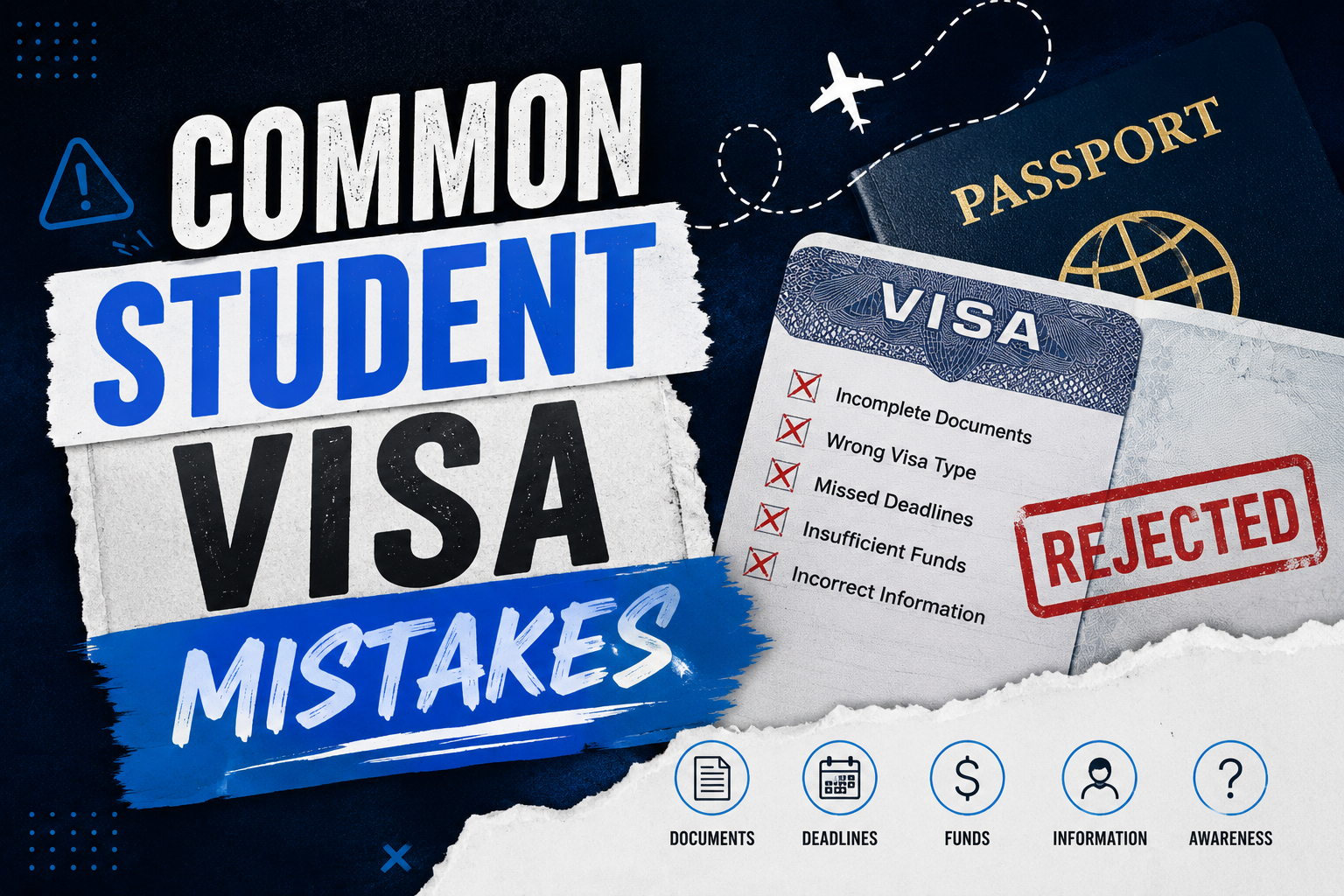
Common Student Visa Mistakes: 2026 Avoidance Guide
Avoid devastating study permit rejections. Learn the common student visa mistakes driving 2026 rejections in Canada, the UK, and Australia.

How to Choose Your Study Abroad Destination: Strategic 2026 Decision Guide
Key factors every student should consider.